
AI for IoT at the Edge
Simplicity and Axonis unify fragmented IoT and environmental data into real-time intelligence, helping communities respond earlier and stay safer.
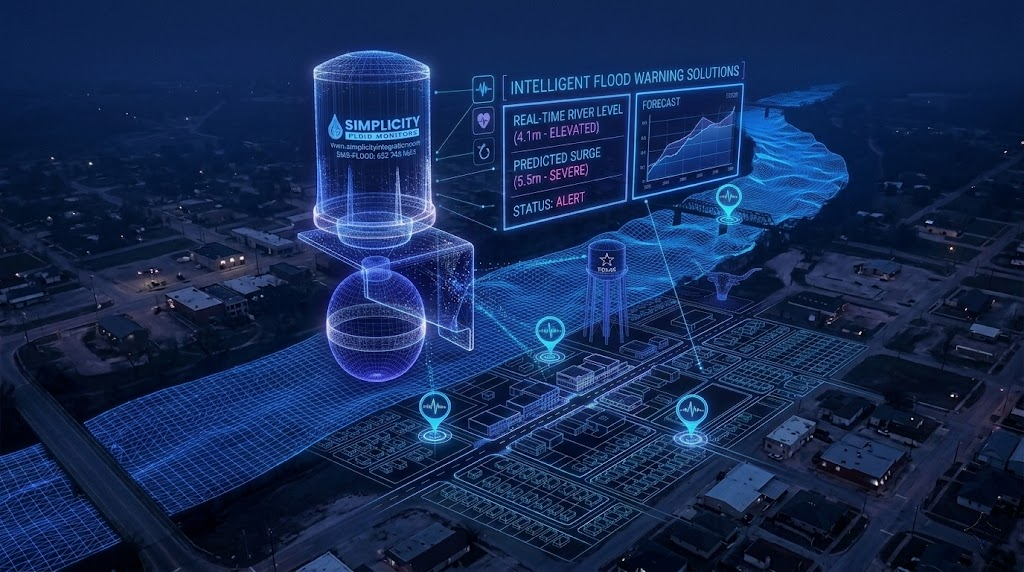
From Flood Monitoring to Flood Intelligence
How Simplicity Integration and Axonis Are Helping Protect Communities
Flood warnings are everywhere.
Phone alerts. County notifications. Emergency broadcasts. Sirens.
But when severe weather hits, many communities still struggle with the same problem: they don’t have the full picture of what is actually happening around them.
For Simplicity Integration, that gap between information and understanding is exactly what needed to change.
“We call it water intelligence and flood preparedness,” said Alison Reese, COO and Co-Founder of Simplicity Integration. “The need was for low-cost, simple systems that can be deployed quickly to help understand water behavior.”
That challenge is larger than most people realize.
Across the country, critical flood-related information already exists. Communities have weather stations, water gauges, environmental sensors, historical flood records, infrastructure monitoring systems, and public data sources tracking waterways and rainfall patterns. The problem is that most of these systems operate independently.
“There are all sorts of fragmented systems that exist across our country,” Reese explained. “Some of them, the federal government has brought in. Some of them, the states have brought in. But none of them speak to each other.”
The result is fragmented visibility during moments when clarity matters most.
Generic Warnings Create Dangerous Blind Spots
Traditional flood warnings are often broad and generalized. A county-wide alert may technically be accurate, but it doesn’t necessarily help people understand whether they are personally at risk.
That lack of specificity creates a dangerous problem: notification fatigue.
“For our customers, they understand that generic warnings aren’t enough,” Reese said. “People get inundated with notifications every day. If those warnings are not specific enough, people ignore them.”
And flooding itself is highly localized.
What happens in Houston is different from what happens in the Texas Hill Country. Soil conditions, terrain, water absorption, upstream waterways, rainfall intensity, and infrastructure all influence how a flood develops and how quickly conditions can become dangerous.
“This is not a one-size-fits-all situation,” Reese explained. “Every community is different.”
That means communities need more than disconnected data feeds or generic alerts. They need operational understanding.
Bringing Together the Full Picture
Working together, Simplicity Integration and Axonis are helping communities move beyond fragmented monitoring systems by bringing together existing IoT sensors, weather feeds, historical flood intelligence, terrain information, soil saturation data, and real-time environmental conditions into one unified operational view.
The goal is not simply collecting more information - there are already many existing sensors deployed. It's about putting the right information together to allow our tools to provide practical insight like:
- What is happening in real time
- What historically has happened in similar situations
- Where vulnerabilities and gaps might be in the information available
- What correlations could help understand specific water behavior better
"It's really about thoughtfully designing a dashboard for our customers to get as much information about their waterways as possible" Reese said.
Using Axonis Decision Intelligence, Simplicity can integrate data from existing infrastructure and sensor networks to create a real-time picture of changing conditions across a community. Rather than requiring cities and counties to completely replace existing systems, the platform helps unify and operationalize the information already available.
That unified operational view allows communities to move from reactive monitoring to predictive insight. “Predictive analysis is really the insight people are missing,” Reese said.
Multiplayer Decision Intelligence makes it possiblefor neighboring counties, utilities, and public safetyagencies to share a real‑time picture of flood riskwithout exposing raw sensor feeds or internalsystems.
Each jurisdiction contributes local signalsinto a shared, trusted risk view that improvesevacuation planning and resource deployment.
Read more about Multiplayer Decision Intelligence:
The system can identify gaps in monitoring coverage, highlight upstream vulnerabilities, correlate environmental conditions, and provide more targeted situational awareness for responders and residents alike.
And critically, the information is designed to be understandable.
“It’s not complicated,” Reese explained. “Anybody can understand it. You don’t have to be a hydrologist or an engineer.”
From Information to Action
For Simplicity, the mission is not about building complicated AI systems. It is about helping people make better decisions when time matters most.
“We truly believe that a simple solution is really to have the right information at the right time,” Reese said.
That philosophy shapes how the platform is designed and deployed.
The company focuses on practical, cost-effective systems tailored to the unique needs of each community. In some cases, that means integrating audible sirens, barriers, crossing arms, and emergency alerting systems alongside mobile notifications and operational dashboards.
The goal is simple: help communities become flood-ready.
“We can’t stop flooding from happening,” Reese said. “But we can make sure that folks are flood ready in simple ways that aren’t overwhelming.”
Specificity is central to that mission.
“It’s all about the specificity of the warning,” Reese explained. “That level of specificity gets people’s attention.”
Instead of broad regional warnings, communities can receive more targeted operational intelligence tied to local conditions and localized risk.
That specificity not only improves awareness - it helps people take the right action earlier.
Beyond Flood Monitoring
For Simplicity and Axonis, flood intelligence is only the beginning.
The same operational intelligence framework can also help communities improve disaster response and recovery efforts after a storm has passed.
“After a storm goes through, responders need to know where to start,” Reese said.
By layering flood intelligence together with information about vulnerable populations, food access, power outages, healthcare disparities, and community infrastructure, the platform can help responders prioritize recovery efforts more effectively.
“Once you layer in good information, you can start to see a picture that you can’t see if you’re looking at all of them separately,” Reese explained.
That broader vision reflects what both companies believe is the future of operational intelligence: not isolated systems, but connected insight that helps communities respond faster, safer, and more effectively.
Practical Intelligence for Safer Communities
As infrastructure challenges continue to grow, communities are under increasing pressure to make faster and more informed decisions with limited resources.
For Simplicity Integration, the answer is not more complexity.
It is clearer insight.
“Good data creates practical action,” Reese said.
Together, Simplicity and Axonis are helping communities move from fragmented monitoring toward a more complete operational understanding of what is happening in real time, giving responders, residents, and decision-makers the full picture they need to take the right action.
“We’re not just collecting information,” Reese said. “We are generating intelligence.”