
Axonis Events and Webinars
Axonis shows up where the hard version of this problem gets discussed: enterprise AI conferences, defense and intelligence forums, healthcare data governance sessions, and industry webinars where the audience is the people who have to make the architecture work.
What we talk about
- Running production AI on data that cannot be centralized, and what that costs against the alternative
- Decision Intelligence: capturing every AI-assisted decision with its evidence, model, policy context and human attestation, so the answer exists when someone asks why
- Governing agentic AI through Federated MCP, so agents operate inside enforced data access boundaries rather than beside them
- What breaks at the edge: intermittent links, disconnected operation, and inference where latency has operational consequences
Who these sessions are for
The audience we design for is the enterprise architect, the VP of AI or ML, and the chief data officer who has been asked to make AI work inside constraints they did not choose. Sessions assume you know your own stack. We do not spend time explaining what a model is, and we do not use the slot to run a product demo.
.png)
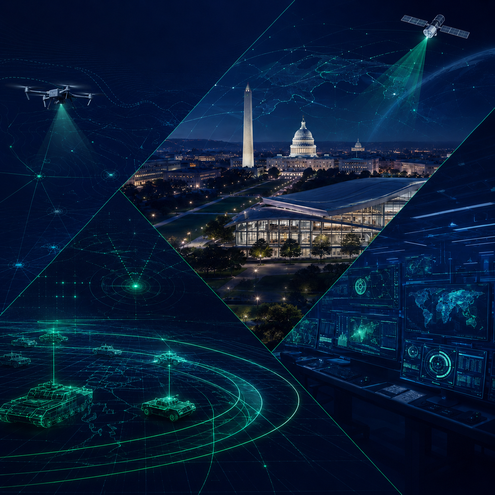
Association of the United States Army (AUSA) Annual Meeting & Exposition



Fast Enough to Matter: Closing the Sensor-to-Decision Gap
Webinars on demand
Recorded sessions stay available after the live date. Each recording page carries the slides and a written summary, so you can read the argument in two minutes and watch the session only if the detail matters to you.
How to get the most out of a session
Come with your constraint written down: where the data sits, who governs each location, what the links between them look like, and what has already failed. The Q&A is consistently more useful than the presentation, and the questions that get the best answers are specific ones.
Speaking and panel requests
Our engineers and executives speak on decentralized AI architecture, AI governance in regulated industries, and decision accountability. If you are programming an event and want someone who has deployed these systems rather than described them, get in touch through Contact.
Why we do these in person
The objection we hear most often is that decentralized AI sounds correct in principle and impractical in reality. That is a fair objection, and it is difficult to answer in a slide. It is much easier to answer in a room, with an architecture diagram on the screen and someone in the audience describing their actual network. That is what these sessions are for.