
Welcome to the Pattern Recognition Economy
As AI transforms the economics of information, the real value lies in recognizing patterns across all data sources to uncover insights that would otherwise remain hidden...even when that data spans organizational boundaries, crosses borders and jurisdictions, or resides at the edge.
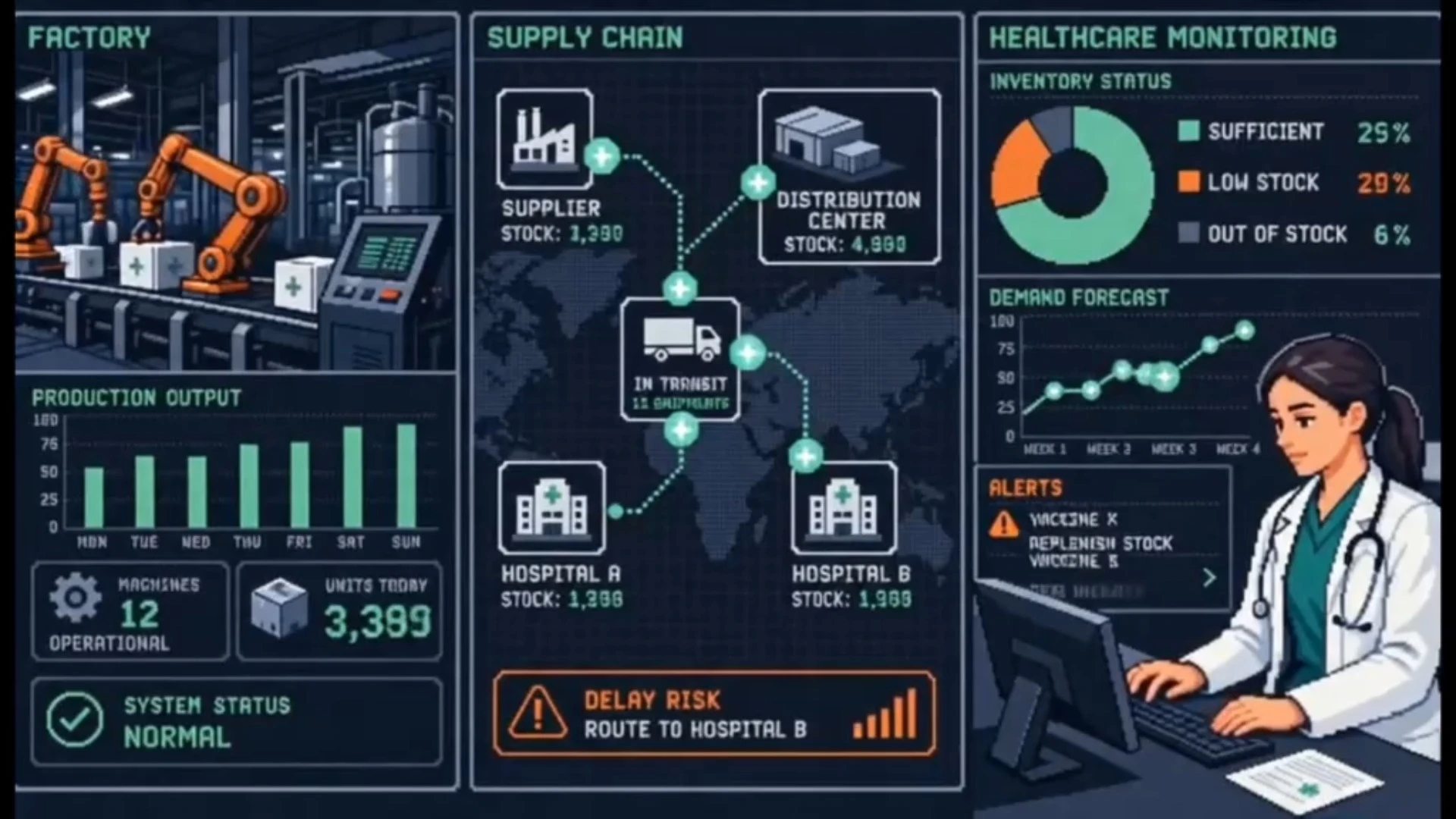
For most of the last three decades, enterprise technology has been built around a fairly simple idea: if we could collect more information and get better at analyzing it, we'd make better decisions.
That assumption shaped an entire generation of technology investments. Organizations built data warehouses, then data lakes. They instrumented factories, connected supply chains, digitized healthcare records, modernized financial systems, and deployed sensors across everything from manufacturing equipment to city infrastructure. Governments invested in increasingly sophisticated intelligence and surveillance capabilities. The objective was consistent: collect more information, organize it, analyze it, and better decisions would naturally follow.
To be fair, that approach worked to some degree.
What has been overlooked, however, is that there was a natural balance built into those systems. Collecting information was expensive. Analyzing information was expensive. Every new sensor required investment. Every new dataset required infrastructure. Every analytical capability depended on skilled people who could turn information into understanding. Those costs acted as a governor, limiting both the amount of information organizations could gather and the amount they could realistically interpret.
That balance is shifting.
Connected systems now generate operational data continuously. Sensors have become inexpensive enough to deploy almost anywhere. At the same time, AI has dramatically reduced the effort required to analyze information. Tasks that once consumed teams of analysts can now be completed in seconds. The economics have changed almost overnight.
At first glance, this feels like extraordinary progress. If organizations can collect more information and analyze it faster than ever before, decision-making should improve dramatically.
Yet when I talk with executives across industries, I hear a very different story.
Very few tell me they're struggling because they don't have enough information. Most describe exactly the opposite. They have more dashboards, more alerts, more reports, more telemetry, and more AI-generated recommendations than ever before, yet many still lack confidence that they're seeing what actually matters. And this is directly linked to discovery.
The next wave of value will come from discovering the patterns hidden inside information that already exists.
The information organizations need to understand what's really happening rarely exists inside a single enterprise. It exists across suppliers and customers, government agencies and commercial partners, hospitals and research institutions, utilities and municipalities, financial institutions and regulators. Every participant has a legitimate reason to protect its own information. Every participant has a clear view of its own operations. What no one sees are the relationships that exist between them.
That isn't a new problem.
History is full of examples where the information existed long before anyone recognized the pattern. Pearl Harbor wasn't a failure to collect intelligence. The 9/11 Commission reached much the same conclusion decades later. More recently, SolarWinds demonstrated how difficult it is to recognize a coordinated campaign when every organization sees only a small part of what's unfolding. The information was there. The understanding wasn't.
AI did not create this problem. It exposed it.
As collection becomes inexpensive and analysis becomes increasingly automated, the one capability that is more valuable than ever is the ability to discover relationships hidden across fragmented information.
That's why I believe we no longer live in an information economy.
We live in a pattern recognition economy.
The Most Important Patterns Don't Belong to Anyone
One of the assumptions that quietly underpins much of enterprise AI is that the relevant information is already available to the model. Increasingly, that's simply not true.
Imagine three organizations observing what appear to be unrelated events. A bank detects unusual wire transfers. A telecommunications provider notices a spike in SIM swaps. Somewhere else, law enforcement is tracking coordinated international travel involving individuals who appear to have no connection to either event.
Each organization is doing exactly what it's supposed to do.
Each has good information.
None of them concludes it's looking at organized financial crime because, from where each sits, the evidence isn't compelling enough. The pattern only emerges when those observations are considered together.
The same dynamic plays out across nearly every industry. Climate events unfold across municipalities, utilities, emergency services, and transportation authorities. Healthcare outcomes increasingly depend on information spread across providers, laboratories, insurers, and researchers. Cyberattacks rarely remain inside a single enterprise. They move through suppliers, cloud providers, software platforms, and partner ecosystems before anyone realizes they're part of the same campaign.
The most important signals no longer live inside individual datasets. They emerge from the relationships between them. That's a fundamentally different challenge than simply analyzing more data.
.webp)
We've Been Solving the Wrong Problem
For years, the obvious response to fragmented information was centralization.
Build another warehouse. Create another data lake. Move everything into the cloud.
Construct a common operating picture by putting every relevant dataset into one environment. Those strategies made perfect sense when the assumption was that information could eventually be consolidated.
Increasingly, it can't.
Healthcare organizations cannot simply centralize protected patient information across jurisdictions. Financial institutions operate under strict regulatory frameworks. Governments protect classified intelligence. Critical infrastructure operators secure sensitive operational data. Commercial organizations safeguard information that represents competitive advantage.
These aren't temporary barriers that technology will eventually overcome. They're permanent characteristics of the environments organizations operate in.
The future isn't about convincing organizations to move more data. It's about discovering more intelligence while allowing every participant to retain ownership and control of the information they already have. Once you accept that reality, the architecture changes completely.
A Different Architecture for Discovery
That realization ultimately led us to ask a different question. If organizations can't centralize their most valuable information, how do they still recognize patterns that span organizational boundaries?
That's the thinking behind Axonis Multiplayer Decision Intelligence.
The name is intentional.
In multiplayer environments, independent participants contribute to a shared experience without giving up ownership of their own world. Enterprise AI increasingly faces the same challenge. Organizations need to collaborate without surrendering control of their information.
Rather than moving raw data into a common repository, Multiplayer Decision Intelligence derives insights where the data already lives. Only the intelligence needed to support a broader decision process is shared. The underlying data never leaves its point of origin. Every organization retains ownership, governance, and policy control while contributing to a richer understanding than any one participant could create independently.
The objective isn't another shared database. It's a shared understanding.
That may sound like a subtle distinction, but I believe it's one of the most important architectural shifts happening in enterprise AI. And discovery is only the entry point. The same architecture carries a decision through its full life: discover the pattern, understand the evidence, recommend a course of action grounded in policy and precedent, decide with a human in the loop, act across the participating organizations, and prove afterwards exactly why the organization acted as it did.
Trust Is What Makes Intelligence Actionable
Of course, discovering patterns across organizations introduces another challenge. How do you know the result is trustworthy?
One of the things that concerns me about today's AI landscape is the pressure to always produce an answer. In many business settings that's acceptable. In operational environments, it isn't.
When decisions affect financial systems, critical infrastructure, public safety, healthcare, or national security, confidence alone isn't enough. Decision-makers need evidence. They need to understand how a recommendation was reached, what information contributed to it, and whether that evidence is actually sufficient to justify action.
That's why governance can't be treated as an afterthought.
At Axonis, every multiplayer decision is governed through what we call a Lens – a human-readable contract that defines what evidence matters, how confidence is calculated, what policies apply, and how much supporting evidence is required before a recommendation can be made.
Perhaps more importantly, the system knows when not to answer. A confident answer built on weak evidence is worse than no answer at all. Sometimes the most trustworthy thing an AI system can say is that the evidence simply isn't there yet.
.webp)
Discovery is the Next Frontier
Every major technology shift changes where value is created.
For decades, value came from collecting information. Today, AI is transforming analysis. The next frontier is discovery.
Not discovering more information, but discovering what no single organization can see on its own.
The same shift reframes the question every technology leader is asking this year: how do we deploy AI agents safely? The answer will not be smarter agents. It will be governed execution - agents that operate inside the same evidence, policy, and attestation boundaries as the people they work alongside
I believe that's where the next generation of competitive advantage will come from. Not from organizations with the largest data estates or the biggest foundation models, but from organizations that can recognize meaningful patterns across fragmented information while preserving governance, privacy, sovereignty, and trust. As models become commodities, advantage shifts from generating intelligence to governing how intelligence is trusted, shared, and acted upon.
That's ultimately what Axonis Multiplayer Intelligence is abou
Not replacing human judgment. Not centralizing the world's information. But giving organizations the ability to see what has always been there and to act on it before the opportunity passes. The organizations that win the next decade will not be the ones that collect the most or analyze the fastest. They will be the ones that execute better.
Welcome to the Pattern Recognition Economy